Frozen pipes in Northern Ireland: how to spot them, thaw them safely, and stop them bursting
Frozen pipes in Northern Ireland are a real winter risk. Here's what Belfast homeowners can do right now, and when to call an emergency plumber.

When the temperature drops in Belfast, pipes don't wait for business hours
A hard frost overnight and you wake up to no water at the tap. Or worse, you hear a drip somewhere behind a wall. Frozen pipes in Northern Ireland are not a rare event, the combination of older housing stock, exposed pipework in unheated spaces, and the kind of damp cold that settles in off Belfast Lough makes this a genuine winter hazard every year.
This guide is for homeowners, tenants and landlords who want to know what to do before a freeze, what to do during one, and when to pick up the phone.
Why Northern Ireland's housing stock is particularly vulnerable
A lot of Belfast homes were built in the Victorian and Edwardian eras. Terraced houses in areas like the Lower Falls, the Ormeau Road, Ballynafeigh and east Belfast often have pipework running through unheated roof spaces, outside walls or below suspended timber floors. These are the spots that freeze first.
Modern builds are better insulated, but even relatively recent semis in Newtownabbey, Lisburn, Castlereagh or Bangor can have pipes in garages, utility rooms or external box extensions that simply don't get enough background heat.
The other factor is the type of cold we get here. Northern Ireland doesn't always get sustained deep freezes, but it gets a lot of nights that hover just below zero with high moisture in the air. That damp cold penetrates older walls more readily than a dry continental frost. Pipes that have been fine for years can suddenly freeze when conditions combine in the wrong way.
The warning signs: when should you worry about frozen pipes?
You don't always get obvious warning signs, but here's what to watch for:
- No water or very low pressure at a tap when everything was normal the night before
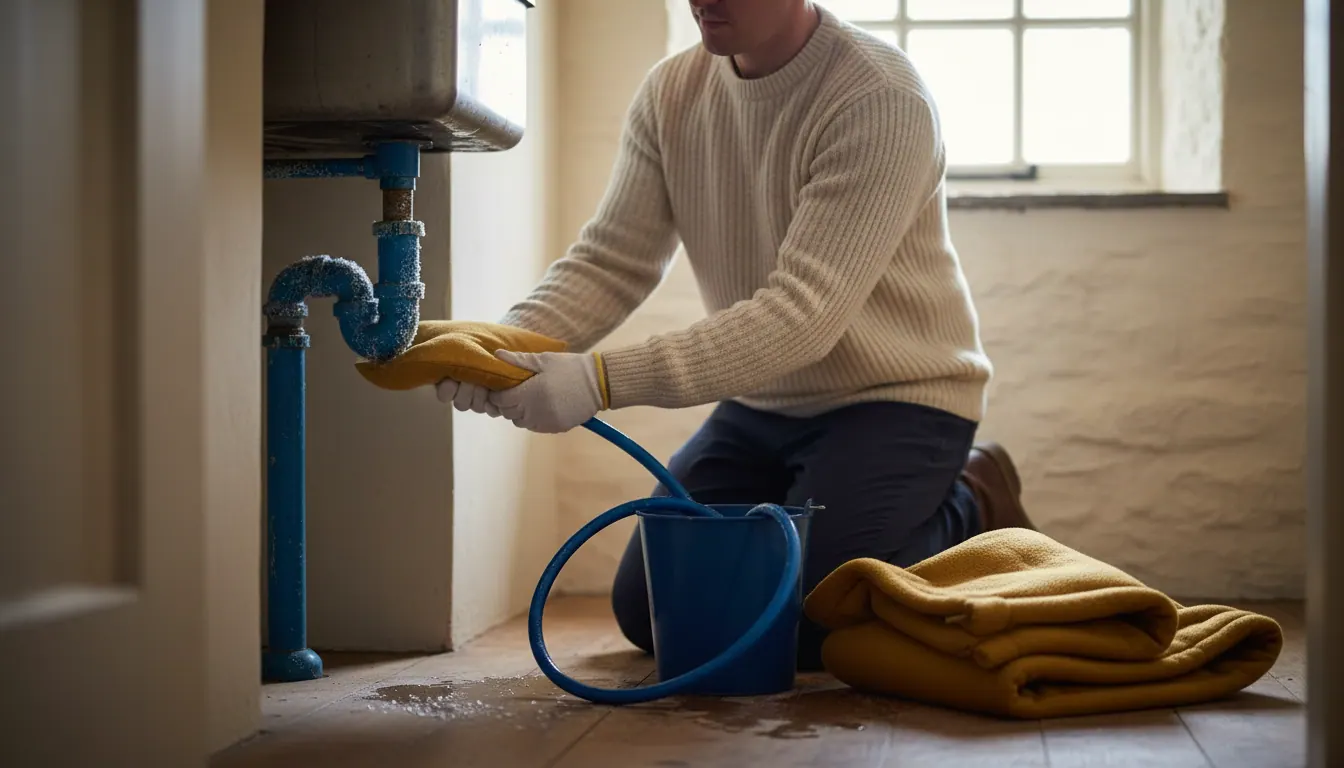
- Frost on exposed pipework in a loft, garage or under the sink
- Unusual sounds, banging, gurgling or complete silence where you'd normally hear water moving
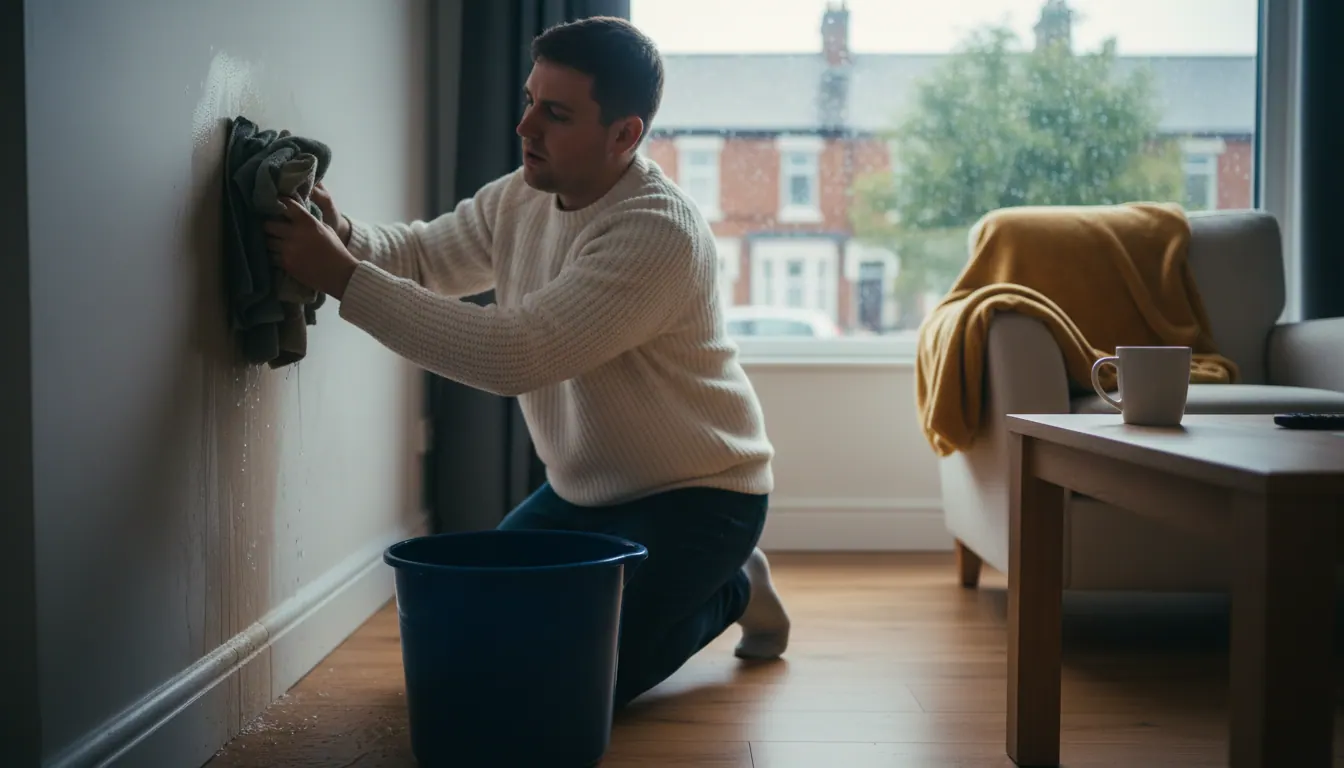
- A bulge or damp patch appearing on a wall or ceiling after a cold night
The moment you suspect a pipe has frozen, act. A frozen pipe hasn't necessarily burst yet. Catch it early and you may avoid the bigger problem.
If you spot a damp patch or water coming through a ceiling, the pipe may already have burst. Turn off your stopcock immediately. If you're not sure where yours is, our guide to finding your stopcock walks you through it room by room.
What you can do yourself before calling a plumber
If you've found a frozen pipe and it hasn't burst, there are a few things you can safely try:
Warm the pipe gently. A hairdryer on a low setting, a hot water bottle wrapped around the pipe, or warm (not boiling) water poured over lagging are all reasonable approaches. Start from the tap end and work back towards the cold section. Never use a blowtorch or any open flame near pipework.
Open the tap. Leave the affected tap open so that water can flow as soon as the ice starts to melt. Moving water helps.
Check your lagging. If a pipe has frozen in a loft or garage, the insulation around it has probably failed or was never there. Once the immediate problem is resolved, get it lagged properly before the next cold spell.
Keep the heating ticking over. If you're going away, don't turn the heating off completely. A timer set to come on for a couple of hours morning and evening is enough to keep the temperature in the house above the danger zone.
What you should not do is pour boiling water directly onto a frozen pipe. The sudden temperature change can crack plastic pipes and stress copper joints.
What temperature should the house be to avoid frozen pipes?
A common question, and a practical one. The general guidance is to keep indoor temperatures no lower than around 13°C, even in rooms you're not using. That's enough to prevent the air in unheated spaces from dropping to the point where pipes freeze.
If you're going away for a few days during a cold spell, this is the setting to aim for. It's not about comfort, it's about keeping the fabric of the house above freezing point. Pipes in loft spaces and external walls are always colder than the room temperature, so the warmer you can keep the house, the better the buffer.
Can your pipes still freeze if the water is turned off?
Yes. Water left sitting in pipes doesn't drain away just because you've turned off the stopcock. If there's any water remaining in the pipework, it can still freeze and expand. This catches people out when they turn off the supply before going on holiday, thinking the risk has gone.
To properly protect pipes when a property is going to be empty, you need to drain the system down. That means turning off the supply at the stopcock and then opening taps to let the remaining water out. In older homes with header tanks in the loft, the tank itself needs to be emptied too. If you're not sure how to do this properly, it's worth getting us in to do it before you go.
Landlords: this is your responsibility too
If you rent out a property in Belfast or the surrounding areas, frozen and burst pipes are a landlord issue, not just a tenant inconvenience. Tenants in a property without water or with water coming through a ceiling are entitled to prompt action.
Pre-winter checks make sense. Lagging exposed pipes, making sure the heating system is working, and ensuring tenants know where the stopcock is are all straightforward steps. If a tenant calls you on a January night to say there's no water or water is coming through a ceiling, that's an emergency callout. We deal with those.
When to call us rather than wait
Some situations need a plumber immediately:
- Water is actively leaking or you can see a pipe has split
- You've tried to thaw the pipe and nothing is happening
- You can't locate the source of the freeze
- The stopcock isn't turning or isn't stopping the flow
- Water is coming through a ceiling or down a wall
Burst pipes in older Belfast terraces can cause serious damage very quickly once they thaw, because the pressure that's been building behind the ice releases all at once. We've written more about why those older homes are particularly at risk in our article on burst pipes in Belfast terraces.
We take emergency calls. A pipe doesn't care that it's 3am on a Sunday, and neither do we. If you're standing in water or watching a ceiling start to sag, call us.
Before the cold arrives: practical prevention
The best time to deal with frozen pipes is before they happen. A few things worth doing now, while the weather is still manageable:
- Check your loft insulation. If pipework up there is exposed, get it lagged. Foam pipe lagging is cheap and takes minutes to fit.
- Look at outdoor taps. External taps are extremely vulnerable. Fit an isolating valve inside and drain the external tap before the first frost.
- Service your stopcock. If it hasn't been turned in years, it may be seized. Better to find that out now than when you need it in a hurry.
- Check under kitchen and bathroom sinks. Pipes running through external walls under sinks are a common freeze point. A small amount of draught excluder around where the pipe enters the wall makes a difference.
- Tell your tenants. If you're a landlord, make sure tenants know where the stopcock is and what to do if they wake up to no water.
Frequently asked questions about frozen pipes in Northern Ireland
When should you actually start worrying about frozen pipes? When the overnight forecast drops to zero or below, particularly if it's staying cold during the day as well. A single cold night rarely causes problems if the house is occupied and heated. It's the prolonged cold spells, or properties left unheated, that cause the most damage. Keep an eye on the forecast from October onwards in Northern Ireland.
What can I pour down the drain to unfreeze it? Warm (not boiling) water is the safest option for drain pipes. Some people use salt dissolved in warm water, which can help lower the freezing point slightly. Avoid chemical drain unblockers for frozen pipes, they're designed for blockages, not ice, and won't help. For supply pipes rather than drains, external heat (a hairdryer, warm cloth) is the right approach, not anything poured in.
Can pipes still freeze if the water is turned off? Yes, as covered above. Turning off the supply doesn't remove the water already sitting in the pipes. To fully protect a property during a cold spell, you need to drain the system down completely, including any header tanks in the loft.
What temperature should the house be to stop pipes freezing? Keep it at 13°C or above, even in unused rooms. That gives enough of a buffer to protect pipes in walls and floors, which are always colder than the air temperature in the room. If you're going away, set your heating to come on for a couple of hours morning and evening rather than switching it off entirely.
If you've got a frozen or burst pipe, or you want someone to check your pipework before winter sets in properly, get in touch with us. We're straightforward about what the job needs and we're available when it matters.