Burst pipes after heavy rain: how water gets into your Belfast home and what to do first
Got a water leak after heavy rain in Belfast? Here's how to spot the cause, limit the damage, and when to call an emergency plumber.

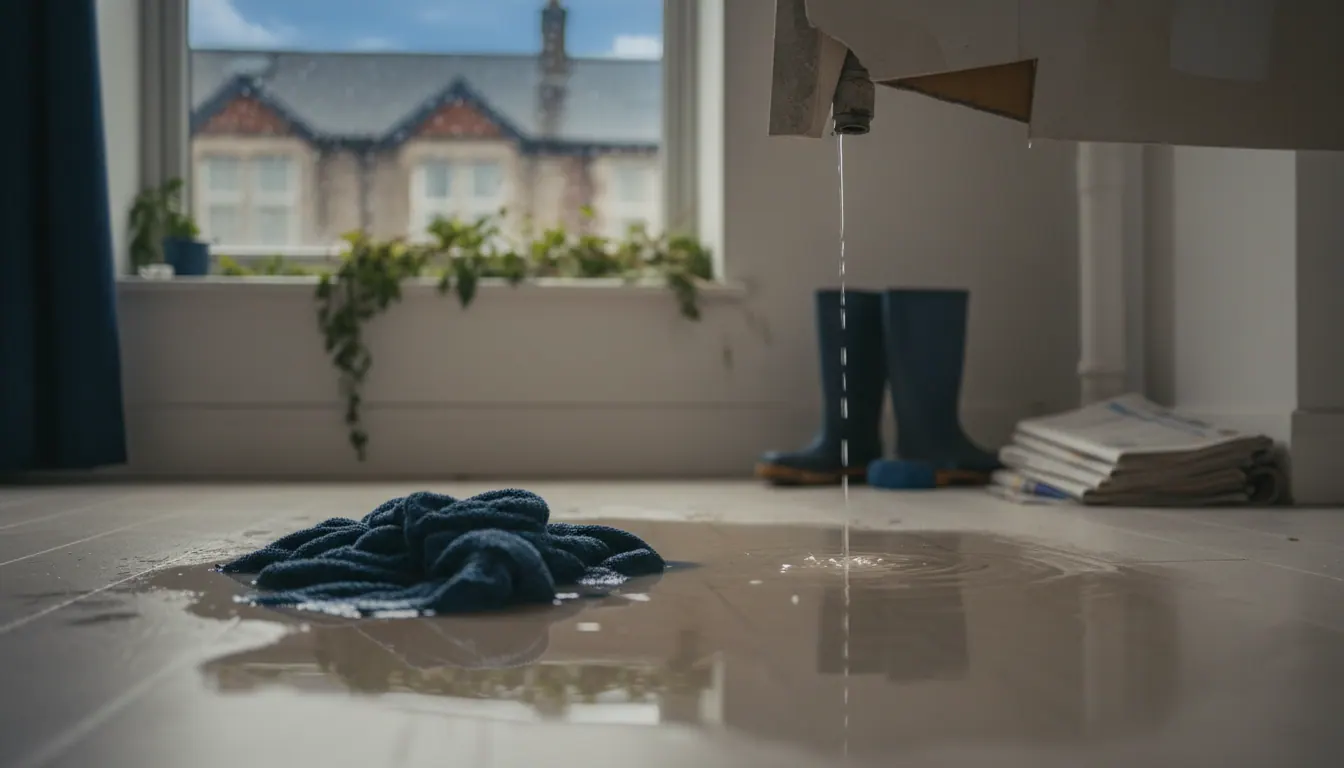
A wet spell in Belfast and suddenly there's water where it shouldn't be
Belfast gets a lot of rain. That's not news to anyone who lives here. But when a heavy downpour leaves you with a damp patch on the ceiling, water pooling in the hall, or a leak appearing through a wall, it's easy to assume the roof is at fault. Sometimes it is. Often, though, the cause is a plumbing problem that the rain has exposed rather than caused.
Knowing the difference matters, because a roofing issue and a plumbing issue need different people to fix them. This guide runs through what we typically see after heavy rain in Belfast, what you can do straight away, and when you need an emergency plumber.
Why heavy rain triggers plumbing problems in older Belfast homes
A lot of Belfast's housing stock is Victorian and Edwardian terraced property, plus mid-century semis. These homes were built well, but they have older pipework, original drainage systems, and sometimes decades of deferred maintenance. Heavy rain puts all of that under pressure at once.
Here's what tends to go wrong:
- Blocked outside drains and gullies. Leaf debris, moss and general grime build up in gullies around the base of the house. When a heavy downpour hits, the water has nowhere to go fast enough and backs up. It can then find its way into the property through airbricks, door thresholds or ground-floor walls. This is especially common in autumn. If this sounds familiar, our article on garden drains and gully clearing explains what to look for.
- Overloaded shared drainage. Older terraces often share a common drain run. When it's already partially blocked, a heavy rain event tips it over the edge. You might see water backing up in a downstairs toilet or a slow-draining sink that was fine the day before.
- Soil movement around underground pipes. Prolonged heavy rain saturates the ground. That movement can shift older clay or cast-iron underground pipes, causing joints to open slightly. The first sign is often a slow leak or damp appearing at the base of a wall.
- Flat-roof drainage failures. Some Belfast semis and extensions have flat roofs with internal drainage. If that drain blocks or the pipework fails, water builds up and eventually finds its way through the ceiling. This looks like a roof leak but is actually a drainage and plumbing problem.
- Overflow pipes running constantly. If you notice water dribbling from a white plastic pipe on the outside wall of your house during or after heavy rain, that's an overflow. It means a tank or cistern inside is overfilling. Rain doesn't cause this directly, but cold weather and pressure changes that come with a wet spell can trigger a faulty float valve to stick.
Is it a roof problem or a plumbing problem?
This is the question most homeowners get stuck on. A few pointers:
It's more likely a plumbing or drainage issue if:
- The damp patch is near a soil stack, waste pipe or overflow pipe
- Water is appearing at ground level or in the basement
- A drain outside is visibly overflowing or backing up
- Your toilet, sink or shower is slow to drain at the same time
- The overflow pipe on the outside wall is running
It's more likely a roofing issue if:
- The damp is only at ceiling level, directly under the roof
- It only happens during driving rain from a particular direction
- There's no plumbing above the affected area
If you're unsure, it's worth getting a plumber to check the pipework and drainage side before you pay for a roofer. We can rule out the plumbing causes, which is often the quickest and most straightforward first step.
What to do right now if you have a leak
Stay calm, work through this in order.
1. Protect yourself and the property first. If water is coming through a ceiling and there's a light fitting or socket nearby, switch off the electricity to that circuit at the consumer unit. Don't wait to see if it gets worse.
2. Find your stopcock and be ready to use it. If the leak looks like it's coming from a pipe rather than surface water ingress, you may need to isolate the water supply quickly. If you're not sure where your stopcock is, read our guide on finding your stopcock before you need it in a hurry.
3. Contain the water. Towels, buckets, plastic sheeting over furniture. It sounds obvious but a few minutes spent containing the spread of water saves a lot of damage.
4. Check the outside drain and gully nearest to where the water is appearing. If it's blocked with leaves or debris and is visibly overflowing, clearing it may reduce the immediate problem. Use gloves, scoop out the debris, and see if the water level drops.
5. Call us. If you can't identify the source, if water is still coming in, or if you suspect a pipe has failed, that's when you need an emergency plumber. We're available around the clock, seven days a week. Don't wait until morning if water is actively causing damage.
Hidden leaks that heavy rain can mask
One thing we see regularly: a leak that was already present gets blamed on the rain. A slow drip from a joint behind a wall or under a floor might have been there for weeks, but the homeowner only notices it when the rain draws their attention to damp patches. The rain didn't cause the leak. It just made it visible.
If you've had a damp patch appear after rain and it doesn't fully dry out between wet spells, that's a sign of an existing leak rather than water ingress. Our article on leak detection in Belfast covers how to spot the difference between surface water ingress and a hidden pipe leak.
Blocked drains after heavy rain: when is it your pipe and when is it NI Water's?
This is a genuinely useful thing to know. In Belfast, NI Water is responsible for the public sewer. You are responsible for the drains within the boundary of your property. If the blockage is on your side of the boundary, it's your job to sort it. If the public sewer is backing up due to capacity or a blockage in the main, NI Water need to know.
Signs that it might be a public sewer issue:
- Multiple properties in your street are affected at the same time
- Water is coming up through manholes in the road or pavement
- NI Water has issued a notice about drainage issues in your area
Signs it's likely your drain:
- Only your property is affected
- The blockage clears when you have your drain rodded
- It's been a recurring problem
If it's your drain, we can help with that. If it turns out to be a NI Water issue, we'll tell you straight.
When to call an emergency plumber after heavy rain in Belfast
Not every damp patch is a 3am emergency. But some situations genuinely are. Call us immediately if:
- Water is actively pouring or flowing inside the property
- You can't identify the source and it's getting worse
- Water is near electrics
- A pipe has visibly burst or is spraying
- Sewage is backing up into the property
For slower-developing issues, like a damp patch that appeared overnight but isn't spreading, you can call during the day and we'll get to you as soon as we can. Either way, we're available around the clock.
Frequently asked questions
Why does my house get a water leak every time it rains heavily in Belfast?
If it happens consistently after rain, the most likely causes are a blocked outside gully or drain that's backing water up towards the house, a failed joint on an underground pipe that lets in groundwater when the soil is saturated, or an overflow pipe that's responding to pressure changes in the system. It's worth having a plumber check the drainage and external pipework rather than assuming it's always the roof.
How do I know if a leak after rain is a plumbing issue or a roofing issue?
Check where the water is appearing and what's above it. If there's a soil stack, waste pipe, flat-roof drain or overflow pipe nearby, start with a plumber. If the damp is only at ceiling level with no pipework above, a roofer is more likely the right call. When in doubt, a plumber can rule out the drainage and pipework causes quickly.
Should I call NI Water or a plumber if my drain is overflowing after heavy rain?
Check whether the problem is isolated to your property or affecting the street. If it's just you, it's almost certainly your drain and you need a plumber. If manholes in the road are overflowing and neighbours are affected too, contact NI Water. They're responsible for the public sewer network.
How do I spot a dodgy plumber when I need one urgently after a leak?
Urgency makes people rush, which is when cowboy traders do their best business. Ask for a clear explanation of what they've found and what the fix involves before any work starts. Be wary of anyone who won't give you a straight answer or pressures you to agree to work immediately without explaining why. Our article on how to spot a dodgy plumber covers the key warning signs in detail.
Get in touch
If you've got a water leak after heavy rain in Belfast or the surrounding areas and you're not sure what's causing it, call us. We're here around the clock, seven days a week. Tell us what you're seeing and we'll give you a straight answer on whether it needs urgent attention.
Leak, blockage or a bathroom to fit? Ring CPL Plumbing, Belfast
Call us- Finding your stopcock: a Belfast homeowner's guide to shutting off the water fast
- Leak detection in Belfast: how to spot a hidden water leak before it damages your home
- How to spot a dodgy plumber: what to check before you hire
- Blocked drain after heavy rain in Belfast: is it your pipes or the sewer?