No hot water this winter? Immersion heater faults and when to call a plumber
No hot water from your immersion heater in Belfast? We explain the common faults, what you can safely check yourself, and when to call us.
No hot water and the immersion heater is the problem
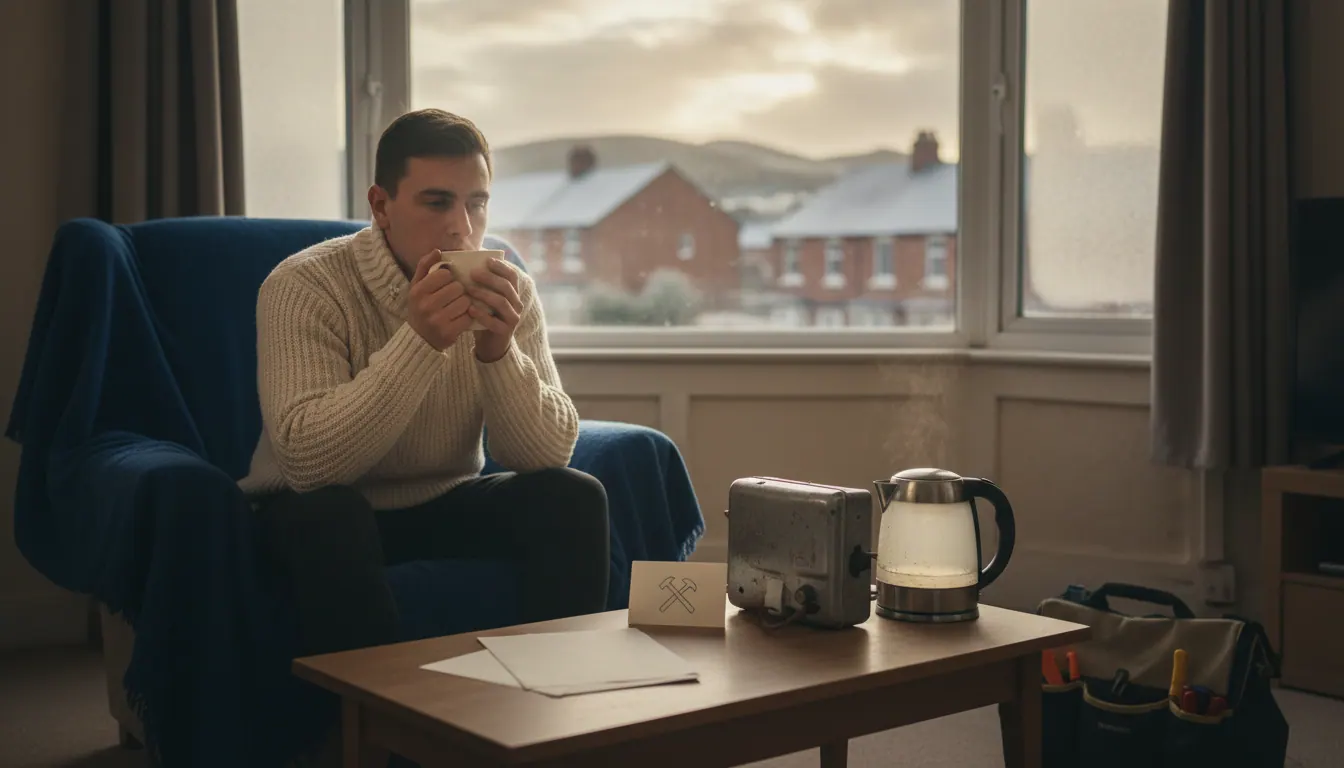
A cold shower at 7am is nobody's idea of a good start. If your immersion heater has stopped working and you are not sure why, the good news is that a few of the most common causes are straightforward to identify, and some you can check yourself before picking up the phone.
This guide covers how an immersion heater works, the faults we see most often in Belfast homes, what you can safely do yourself, and when the job needs a plumber.
How an immersion heater actually works
An immersion heater is an electric heating element fitted directly into your hot water cylinder. Think of it like a large kettle element sitting inside the tank. When it is switched on, it heats the water around it. A thermostat controls the temperature and cuts the power once the water reaches the set level.
Most older Belfast homes, particularly the terraced and semi-detached stock built from the 1950s through to the 1980s, were built with a hot water cylinder in an airing cupboard. Many of those cylinders still have an immersion heater fitted, even if the household normally relies on a gas system for heating. That immersion heater is often the backup when the main system fails, or the only source of hot water in an all-electric property.
Because it runs on electricity and sits inside a tank of water, faults tend to fall into a small number of categories: the element has failed, the thermostat has tripped or failed, there is a wiring or fuse issue, or the timer is set incorrectly.
The most common reasons an immersion heater stops working
1. The thermostat has tripped
Immersion heater thermostats have a safety cut-out. If the water overheats, the cut-out trips and the element will not come back on until it is manually reset. This is the first thing worth checking.
The reset button is usually a small red or white button on the thermostat unit, which sits at the top of the element assembly under a plastic cover on the side of the cylinder. Press it firmly. If it clicks, try switching the immersion back on. If it trips again quickly, do not keep resetting it. A thermostat that keeps tripping is telling you something is wrong, and that is a job for a plumber.
2. The element has burned out
Elements do not last forever. Scale build-up, age, and repeated on-off cycling all shorten their life. When an element fails, the water simply will not heat up, no matter how long the immersion runs. There is no DIY fix for a failed element. It needs to be replaced.
3. A blown fuse or tripped circuit breaker
Check your consumer unit. The immersion heater should have its own dedicated circuit. If the breaker has tripped or the fuse has blown, that is why there is no power to the element. Reset the breaker or replace the fuse. If it trips again immediately, there is a fault in the circuit that needs investigating properly.
4. The timer is set wrong
This sounds obvious, but it catches people out, especially after a power cut or a clocks-change weekend. Check that the timer is set to the correct time and that the on/off periods are actually programmed. A timer that has lost its settings will not switch the immersion on at all.
5. The thermostat has failed (not just tripped)
A thermostat that has failed outright will either leave the element running constantly (causing the safety cut-out to trip) or stop the element coming on at all. Either way, the thermostat needs replacing.
6. Wiring faults or a faulty flex
The connection between the immersion heater and the power supply can deteriorate over time, especially in older installations. Loose connections, corroded terminals, or a damaged flex are all possible. Do not investigate wiring yourself unless you are a qualified electrician. If the element and thermostat check out fine but there is still no power, get a professional to look at the electrics.
What you can safely check yourself
Before calling us, run through these steps:
- Check the consumer unit for a tripped breaker on the immersion circuit.
- Check the timer or programmer is set correctly and showing the right time.
- Locate the thermostat on the cylinder and press the reset button once.
- Switch the immersion on and wait 30 to 45 minutes. Check whether the water is warming at all.
If none of that resolves it, or if anything trips again after resetting, stop there and call a plumber. Messing around with the element or the wiring without the right knowledge can cause real damage.
Will an immersion heater work if the boiler is off?
Yes. The immersion heater runs entirely on electricity and has nothing to do with your boiler or the gas supply. That is exactly why it is useful as a backup. If your main heating system is out of action, the immersion heater can still give you hot water provided the cylinder and element are working.
If your boiler is off and you are relying on the immersion heater, just be aware that it will cost more to run than heating water via your boiler system. Use it as a stopgap, not a permanent solution.
If the boiler itself has stopped working, that is a separate issue and one for a Gas Safe registered engineer, not us. We handle the wet side of heating: radiators, pipework, cylinders, and immersion heaters. Gas appliances need a Gas Safe registered engineer.
Replacing an immersion heater element: a job for a plumber
We get asked fairly often whether replacing the element is a DIY job. Technically, it can be done by a competent person, but in practice it involves draining the cylinder, removing the old element (which can be seized solid after years in service), fitting a new one with the correct thread and length, and refilling without introducing air locks. Get it wrong and you are dealing with leaks, a damaged cylinder, or an element that trips the safety cut-out immediately.
Our honest advice: unless you have done it before and know what you are doing, let a plumber handle it. It is not a complex job for us, and it is not worth the risk of a flooded airing cupboard.
If your cylinder is old and the element has failed, it is also worth having a look at the overall condition of the cylinder at the same time. An old copper cylinder that has been running with a failing element may have other issues worth addressing before they become urgent.
For more on how hidden water issues can develop quietly in Belfast homes, our article on leak detection in Belfast is worth a read.
Immersion heaters in Belfast's older housing stock
A lot of the housing stock in Belfast and the surrounding areas was built with indirect hot water cylinders that include an immersion heater as standard. In many of these homes, the cylinder is in a first-floor airing cupboard, often tucked behind a door that nobody opens unless something goes wrong.
Because these cylinders are out of sight, small problems tend to go unnoticed. A thermostat that is running slightly hot, a slow element that is taking longer and longer to heat the water, a timer that has never been set correctly since the last power cut. None of these are dramatic failures, but they all add up to cold water when you least want it.
If you are heading into the colder months and your immersion heater has not been looked at in a while, it is worth a quick check before you actually need it. We can take a look, test the element and thermostat, and let you know if anything needs replacing.
If you are also seeing cold spots on your radiators or losing pressure from your heating system, those are separate issues covered in our guides on cold spots on your Belfast radiators and leaking radiators and losing pressure.
Frequently asked questions
How do I reset an immersion heater thermostat?
Find the thermostat on the side of your hot water cylinder. It sits under a plastic cover, usually held in place by a single screw. Remove the cover and you will see the element head and a small reset button, typically red or white. Press it firmly until you feel it click. Replace the cover, switch the immersion back on, and give it 30 to 45 minutes to heat up. If it trips again, do not keep resetting it. Call a plumber.
Why has my hot water stopped working but the heating is still on?
If your radiators are warm but there is no hot water, the issue is likely specific to the hot water side of the system: the immersion element, the thermostat, the cylinder coil, or the programmer settings. Check the timer first. If the programmer is set correctly and the immersion is not responding, the element or thermostat may have failed.
Will an immersion heater work if the boiler is off?
Yes. An immersion heater runs on electricity and operates completely independently of your boiler. If the boiler is out of action, switching on the immersion will still heat the water in your cylinder. Just bear in mind it uses more electricity to run than heating water through a boiler system, so it is best used as a temporary measure.
Can I replace the immersion heater element myself?
You can, but it is not a straightforward job if you have not done it before. It involves draining the cylinder, removing a potentially seized element, fitting the correct replacement, and refilling without air locks. A mistake can mean leaks or a damaged cylinder. We would generally recommend calling a plumber rather than risking it.
Get in touch
If your immersion heater has stopped working and you are stuck without hot water in Belfast or the surrounding areas, get in touch with us. Tell us what you have already checked and we will take it from there. We are available for emergency calls too, so if it cannot wait, neither will we.