Shower not draining or running slow? Belfast water hardness and what to do about it
Shower drain draining slowly in Belfast? We explain the common causes, what you can fix yourself, and when to call a plumber. Practical advice from CPL Plumbing.

Standing water in your shower is telling you something
You step out of the shower and the tray is still half full. Or the water rises around your ankles before it starts to drop. A slow shower drain is one of those problems people put up with for weeks before doing anything about it, but it rarely fixes itself, and it usually gets worse.
We see this regularly across Belfast and the surrounding areas, in everything from Victorian terraces to modern bathroom fits. The good news is that the cause is nearly always straightforward, and in many cases you can sort it yourself without calling anyone.
Here is what is actually going on, and what to do about it.
Why does a shower drain run slowly?
Most slow shower drains come down to one of a handful of causes. Understanding which one you have saves you time and means you are not pulling apart pipework unnecessarily.
Hair and soap scum buildup
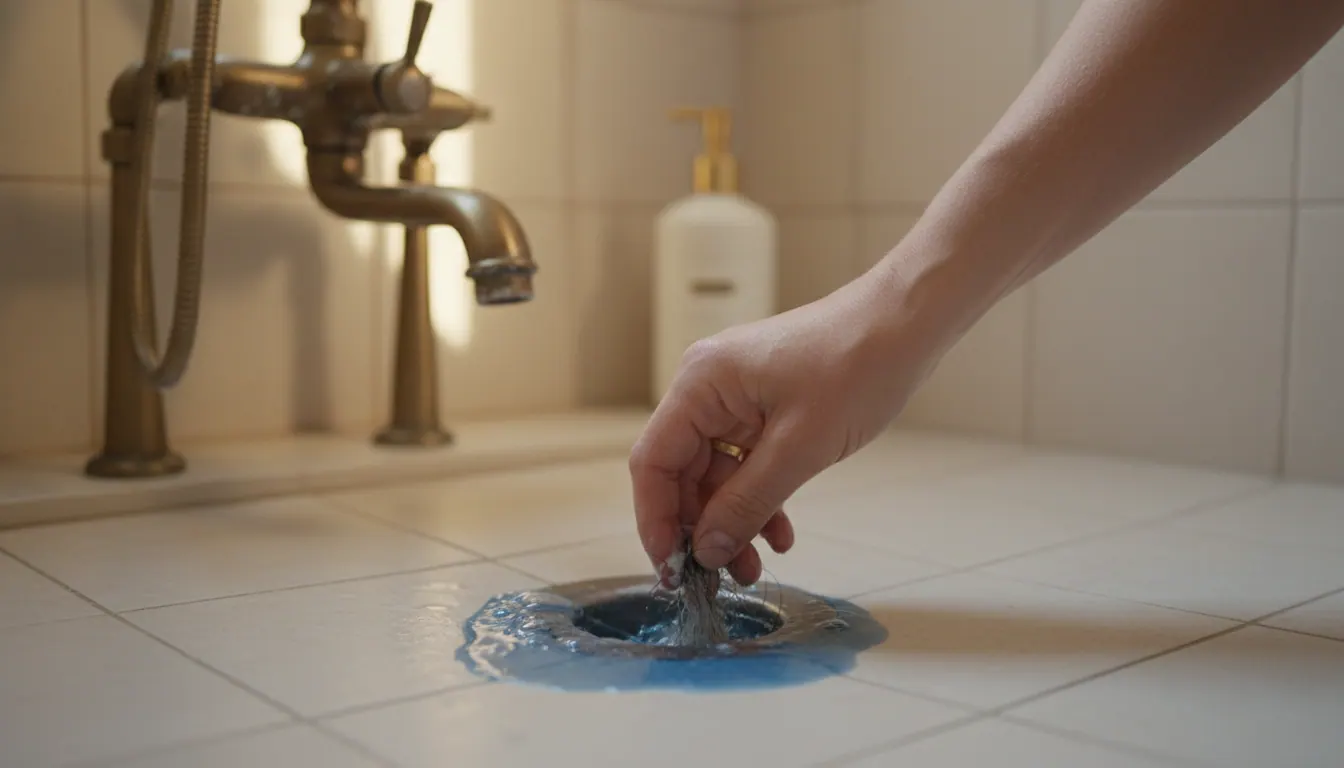
This is the most common cause by a long stretch. Hair collects on the drain cover or just below it, and soap residue binds it together into a sticky mat that restricts flow. It does not take long to build up, especially in a household with more than one person using the shower. The drain looks clear from above, but a few centimetres down there is a solid plug of the stuff.
Soap and product residue in the pipe
Even without hair, shower gels, conditioners and shampoos leave a waxy residue on the inside of the pipe. Over time this narrows the bore and slows the flow. You might notice the drain has become gradually slower over months rather than suddenly stopping.
A blocked or poorly positioned drain cover
Sometimes the cover itself is the problem. Older drain covers in Belfast bathrooms, particularly in properties that have been rented out for years, can become misaligned, cracked or partially blocked with debris. Worth checking before you go further.
A partial blockage further down the waste pipe
If the blockage is not right at the drain, it might be a metre or two down the waste pipe where it bends or connects to the main stack. These take a bit more effort to shift.
Slow drain but no obvious clog
Occasionally a shower drain runs slowly even when there is no visible blockage at the drain itself. This can point to a venting issue in the waste system, a partial restriction deeper in the pipework, or in older Belfast properties, a build-up in a section of pipe that has narrowed over decades. If you have cleared the drain and it is still sluggish, that is when it is worth getting a plumber to have a look.
What you can try yourself first
Before calling anyone, there are a few things worth doing. These are safe, straightforward and cost next to nothing.
Remove and clean the drain cover
Most shower drain covers lift straight off or unscrew with a flat-head screwdriver. Pull it off and clean it thoroughly. Then use a pair of rubber gloves and pull out whatever is sitting just below. It is unpleasant but it works.
Use a drain hook or a bent wire
A purpose-made drain hook (available from any hardware shop) or a straightened wire coat hanger with a small hook bent at the end will let you reach further down and pull out the hair and debris that is below the surface. Go slowly and work it around rather than just pushing down.
Hot water, not boiling
Pouring water down the drain can help shift soap residue. Use hot water from the tap rather than water straight from the kettle. Boiling water can soften or damage the seals on plastic waste fittings, which are common in Belfast bathrooms. Hot tap water is enough to loosen grease and soap without that risk.
Bicarbonate of soda and white vinegar
This is a useful natural option for dissolving hair and soap build-up. Pour half a cup of bicarbonate of soda down the drain, follow it with half a cup of white vinegar, leave it for twenty minutes, then flush through with hot water. It will not shift a serious blockage, but it works well on mild slowness and is safe for all pipe types.
A plunger
A standard cup plunger over the shower drain, with a bit of water in the tray to create a seal, can shift a partial blockage with a few firm pushes. Cover the overflow if there is one. This is worth trying if the manual removal did not fully clear it.
Chemical drain cleaners
These are available widely and will dissolve hair. Follow the instructions carefully, make sure the bathroom is ventilated, and do not use them repeatedly as they can damage older pipework over time. They are a useful occasional option, not a regular solution.
For more on dealing with blockages in your Belfast home, our article on blocked sinks in Belfast kitchens and bathrooms covers when it makes sense to try yourself and when to stop.
When the DIY fixes do not work
If you have cleaned the drain cover, pulled out the blockage, tried the bicarbonate trick and the drain is still running slowly, the problem is further down the pipe. This is where it is worth calling a plumber.
A few signs that you need professional help:
- The shower tray fills with standing water and drains very slowly or not at all
- You have cleared the visible blockage but the problem came back within days
- Other drains in the same bathroom (the basin, the bath) are also running slowly
- There is a gurgling sound from the drain when water is running elsewhere in the house
- There is a smell coming from the drain even after cleaning
Gurgling from multiple drains at the same time often points to a blockage in the shared waste stack rather than the individual shower drain. That is not something a plunger will fix.
Belfast's older housing stock, particularly the terraced streets that make up much of the city, often has older waste pipework that has never been replaced. Partial collapses, root intrusion and decades of build-up are all possible in properties built before the 1970s. If your home is older and you are seeing persistent slow drainage, it is worth having the pipework checked properly.
Heavy rainfall can also play a part. Belfast gets a lot of it, and a blocked or partially blocked drain that is just about managing in dry weather can back up completely after a wet spell. If your slow drain problem gets noticeably worse after rain, have a read of our piece on blocked drains after heavy rain in Belfast for more on what might be happening.
Keeping your shower drain clear going forward
Prevention is straightforward and takes about thirty seconds a week.
- Use a drain hair catcher. These sit over or just inside the drain and catch hair before it gets into the pipe. Empty it every few days.
- Do a quick hot water flush after each shower if you use a lot of conditioning products.
- Once a month, do the bicarbonate and vinegar treatment as maintenance rather than waiting for a problem.
- Every few months, lift the drain cover and check what is building up below it.
That is genuinely all it takes to keep most shower drains running freely.
Frequently asked questions
Why is my shower drain slow even though it does not look blocked?
The blockage is probably just below the surface where you cannot see it, or a bit further down the waste pipe. Hair and soap scum often form a plug a few centimetres below the drain cover rather than right at it. Try using a drain hook to reach deeper before assuming the pipe itself is the problem. If that does not find anything, the restriction could be further along the waste run, which is worth getting a plumber to check.
Does pouring boiling water down a shower drain help?
Hot water yes, boiling water no. Water straight from a kettle can soften the rubber seals on plastic waste fittings, which are standard in most Belfast bathrooms. Hot water from the tap is enough to loosen soap and grease build-up without any risk to the pipework.
My shower drain clogged up all of a sudden. What happened?
A gradual build-up of hair and soap residue can reach a tipping point where the drain goes from slow to completely blocked very quickly. It is not that the blockage appeared overnight, it is that it has been growing for a while and finally got to the point where it is restricting flow seriously. Clear it now and put a hair catcher in to stop it happening again.
How do I dissolve hair in a shower drain without chemicals?
Bicarbonate of soda followed by white vinegar will break down hair and soap residue naturally. Pour in the bicarbonate first, then the vinegar, leave it for twenty minutes and flush with hot water. It works best on mild to moderate build-up. For a serious blockage, a drain hook to physically remove the hair is more effective than trying to dissolve it.
Not sure what you are dealing with?
If the drain is still giving you trouble after trying the steps above, we are here to help. We cover Belfast and the surrounding areas and deal with blocked and slow drains as part of our everyday work. Get in touch with us and we will take a look, figure out what is going on, and get it sorted.